
Clearing Wet Lots and Cypress Domes in Nassau County, FL
A lot of land around Callahan, Hilliard and Bryceville is flat and slow to drain, and the wet spots are typically cypress domes, bayheads or low edges that hold water. Clearing a wet lot here comes down to two questions. Is the wet part a regulated wetland, or just soggy ground? And if it's only soggy, when and how can it be worked without turning it to mud? Here's how to tell, who decides, the buffers that apply, and how to plan the job.
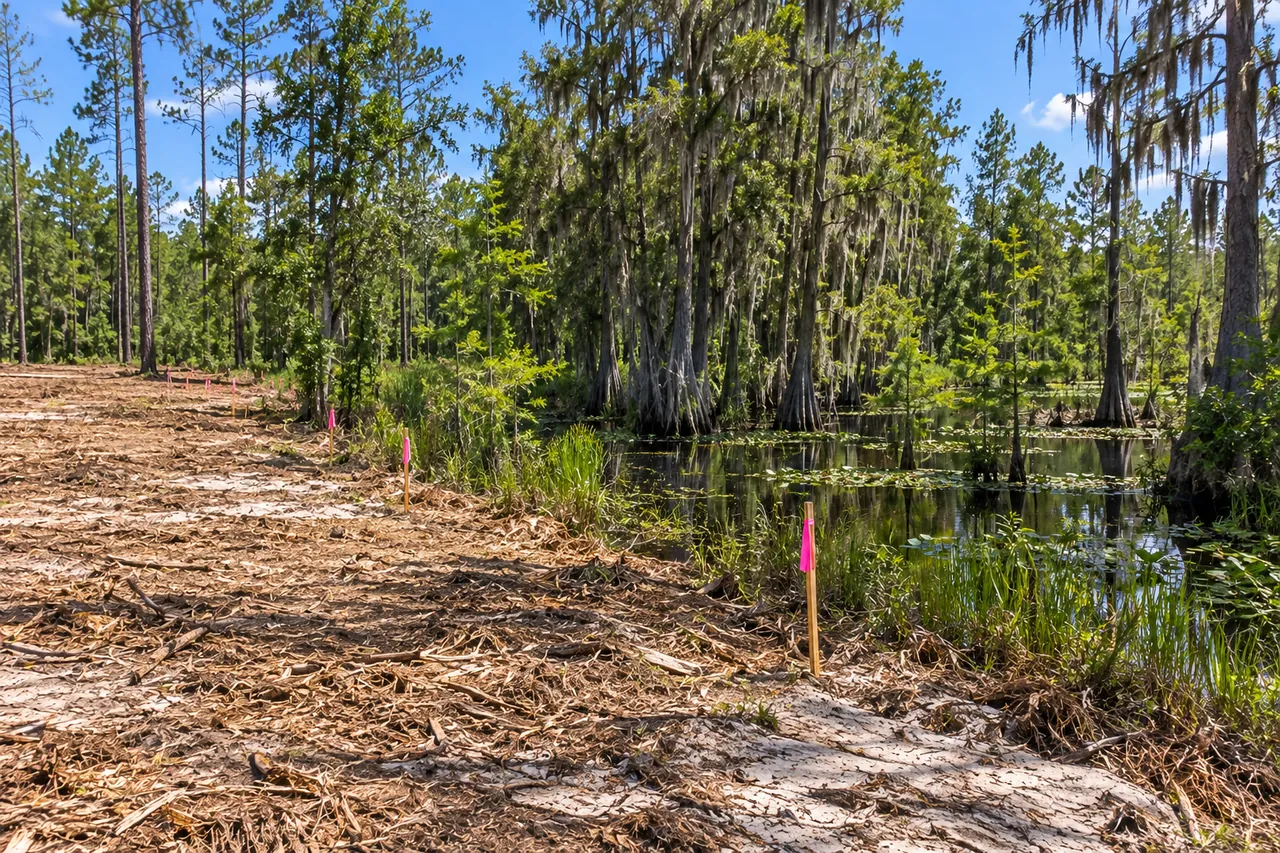
What wet ground looks like here
- A high water table. On much of this land the water table rises close to the surface for part of the year, and water pools after heavy rain. Many soils have a dark hardpan layer not far down.
- Cypress domes. Round stands of pond cypress and swamp tupelo, tallest in the middle and shorter toward the edges, often with standing tea-colored water and cypress knees.
- Bayheads. Dense thickets of evergreen bay trees, sweetbay and loblolly bay, with red maple in the mix.
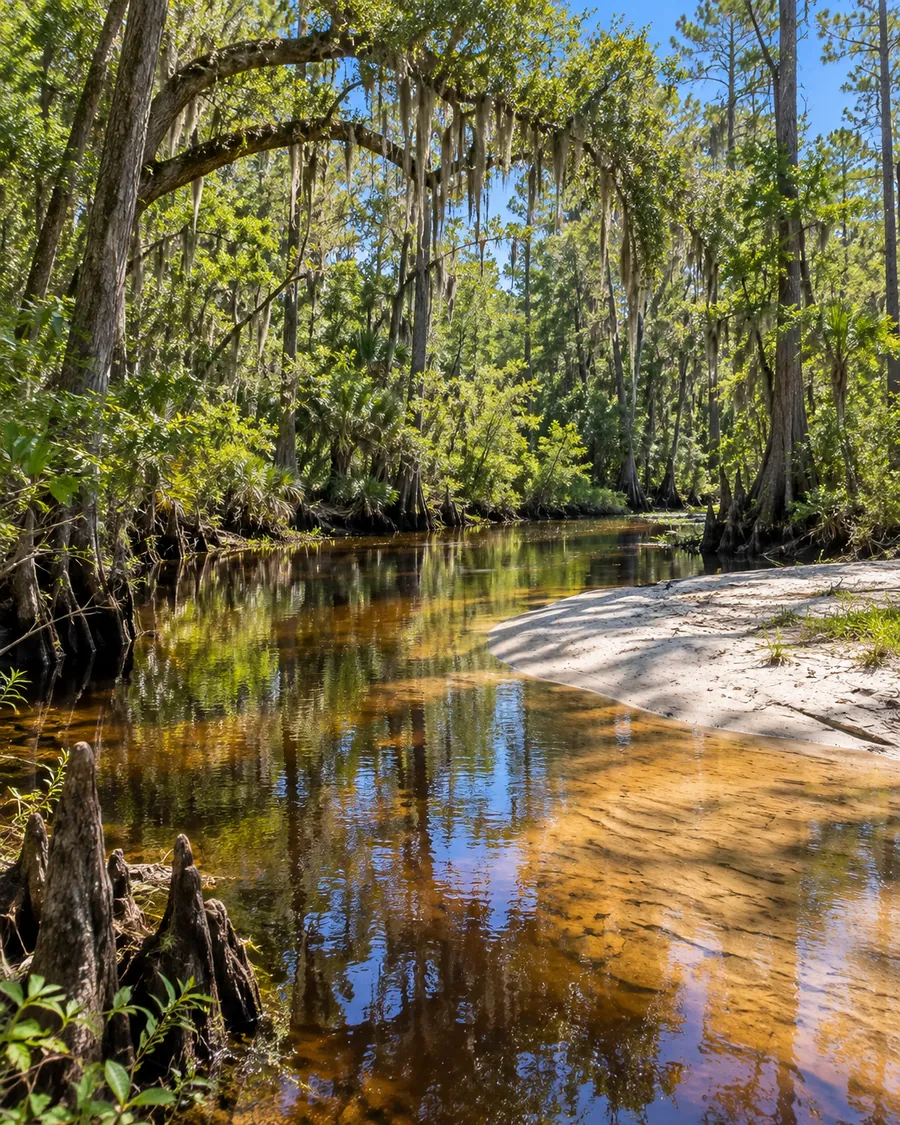
- Blackwater creeks. Tea-colored streams with white sandbars, draining toward the St. Marys and Nassau rivers.
One thing that fools people: pond cypress turns light brown and drops its needles in winter. A dome that looks dead and dry in January is still a cypress dome.
Soggy ground or a regulated wetland?
You often can't tell by looking, especially in a dry month. The safe rule is to treat any cypress dome, bayhead or low wet edge as a wetland until an agency says otherwise. Two levels of government decide:
- The state. Under rule 62-330.020, an Environmental Resource Permit is needed for "any project in, on, or over wetlands or other surface waters." In Nassau County, state wetland permits come from the St. Johns River Water Management District or the FDEP, depending on the project; FDEP's single-family handout says a home's permit or exemption comes from the FDEP. Ask the District's Jacksonville Service Center, (904) 730-6270, or the FDEP Northeast District, (904) 256-1700, which handles yours. The FDEP's single-family handout describes "a verification of exemption for construction of a single-family residence" built entirely on uplands, and the District lists general permits for work in isolated wetlands on single-family lots.
- The federal government. The Army Corps of Engineers' Jacksonville District reviews federal wetland permits in Florida, (904) 232-2568. UF/IFAS notes that the federal exemptions for normal farming and forestry don't cover "mechanized land clearing." Confirm jurisdiction with both before clearing wet ground; the rules here have shifted in recent years.
Buffers along wetlands and water
In unincorporated Nassau County, the county's grading permit packet quotes Land Development Code Section 37.03: "A minimum undisturbed natural vegetative upland buffer of twenty-five (25) feet shall be required and maintained." It adds that "in no instance shall the upland buffer be less than fifteen (15) feet," except next to unavoidable impacts such as road crossings. The same packet makes a grading permit necessary when you're near a stream, wetland or potential wetland and aren't pulling a building permit. Stormwater and Drainage: (904) 530-6390.
Septic systems have their own line: state rule 62-6.005 keeps them 75 feet from the edge of surface water bodies. On forestry land, the state's silviculture practices set special management zones along streams and lakes where mechanical site preparation isn't done.
Flood zones
Low ground near creeks may sit in a FEMA flood zone, and the St. Johns River Water Management District notes that "there are no flood control structures in Nassau County." In the unincorporated county, being in a Special Flood Hazard Area is one of the triggers for the grading permit, and in an AE zone the finished floor of a new home must be at least one foot above the base flood elevation. Nassau County Floodplain Management: (904) 530-6410. Inside the Town of Callahan, the Zoning Administrator is the floodplain administrator, (904) 879-3801. Filling and grading count as development there, and fill must be "the minimum necessary to achieve the intended purpose."
Timing and equipment on soggy uplands
Ground that's wet but not a wetland can still be cleared. The trick is not to fight it.
- Wait for the water table to drop. When ruts fill with dark, tea-colored water, the sand has no strength left. Waiting often costs less than repairing ruts.
- Plan for weather days. Summer afternoon thunderstorms are common here, and a quote should say how rain days are handled.
- Tracked machines and a mulch mat. Forestry mulching leaves roots in place and a layer of chips to ride on, which disturbs soft ground far less than grubbing.
- Mats or a stone pad where equipment has to cross the worst spots, removed when the job is done.
What not to push into wet areas
- Debris, stumps or windrows. Pushing them into a cypress dome or bayhead is work in a wetland. Florida's forestry practices say not to do "bedding, raking and windrowing in wetlands" even on timber land.
- Fill. Filling a wet edge to gain yard space is exactly what the permits are about.
- New ditches to drain it. Florida's agricultural exemption doesn't cover work done "for the sole or predominant purpose of impeding or diverting the flow of surface waters or adversely impacting wetlands." A driveway crossing over a county right-of-way ditch needs its own county permit. See clearing a house site.
What wet ground does to the price
Wet ground adds machine time, weather days, mats and sometimes a consultant or permit, and it can push the debris plan toward mulching. National guides like Angi (September 2026) list clearing at $500 to $5,600 per acre nationally, depending on density and conditions. Those are national figures, not local prices. On a wet lot, budget from a written quote made after a site visit, ideally one that saw the ground in a wet month. More on cost.
Wet lot questions
Can I clear right up to the edge of the cypress dome?
In the unincorporated county, plan on leaving at least the 25-foot natural upland buffer the Land Development Code calls for, and ask Stormwater and Drainage how it applies to your lot. Flag the edge before the machine arrives.
Who decides where the wetland line is?
For state permits, the St. Johns River Water Management District or the FDEP, depending on the project; for federal ones, the Army Corps. Many owners hire an environmental consultant to flag the line and talk to the agencies.
It's dry right now. Can I clear it?
Dry weather doesn't change whether ground is a wetland. It only changes how easy it is to drive on. Settle the wetland question first, then use the dry spell for the upland work.
Can I clear the palmetto and pines around the wet spot?
Usually, on the upland side of the buffer. Mulching is the gentlest way to do it on soft ground, and it keeps debris out of the wet area.
How we help
When you call or fill in the short form, mention any domes, bayheads, creeks or low spots. We send the request to one independent contractor who works in western Nassau County. They walk the land and give you a written quote, and you decide. There's no charge for the referral. This page is general information, not legal advice; the agencies above have the final word.
Want a local contractor to walk your land?
Call or send a short request. There's no charge for the referral.